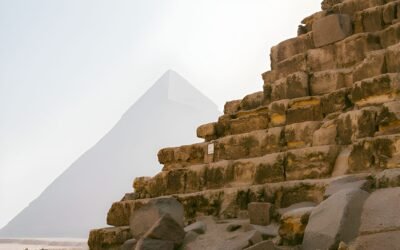
The Sphinx Statue is a limestone monument with a lion’s body and a pharaoh’s head, standing 73 meters long and 20 meters high beside the Great Pyramids of Giza. Most scholars date it to Egypt’s Fourth Dynasty, around 2500 BCE, and believe it depicts Pharaoh Khafre, carved directly from the bedrock of the Giza Plateau.
Key Takeaways
- Measures 73 meters long and 20 meters high; carved directly from Giza Plateau bedrock, making it one of the largest and oldest monolithic statues in the world
- Most scholars attribute it to Pharaoh Khafre, built around 2500 BCE during Egypt’s Fourth Dynasty
- The “Dream Stele” between its paws records Pharaoh Thutmose IV’s vision promising him kingship if he cleared the sand covering the statue
- During the spring and autumn equinoxes, the sunrise aligns directly with the Sphinx’s gaze
- Entry inside the Sphinx is restricted to preserve its stability, though visitors can view and photograph it from multiple angles
History and Symbolism
The Sphinx combines the body of a lion with the head of a pharaoh, symbolizing strength, wisdom, and spiritual guardianship. Ancient Egyptians saw it as a divine guardian watching over the royal necropolis and the sacred plateau of Giza. Over the centuries it has been buried, uncovered, and restored multiple times.
In the “Dream Stele” inscription between its paws, Pharaoh Thutmose IV recounts a vision in which the Sphinx promised him kingship in exchange for clearing away the sand that covered it. Travelers interested in more of Egypt’s royal mythology can also visit the Temple Of Hatshepsut or The Valley Of The Kings.
The Sphinx and Surrounding Monuments
Situated near The Valley Temple, the Sphinx forms part of an architectural ensemble that reflects the Egyptians’ mastery of astronomy and sacred geometry. During the spring and autumn equinoxes, the sunrise aligns directly with the Sphinx’s gaze, symbolizing rebirth and cosmic harmony. Nearby, The Grand Egyptian Museum holds artifacts and displays that contextualize the Sphinx’s construction and preservation.
Best Time to Visit
The ideal time to visit is early morning or late afternoon, when the light enhances its details and crowds are smaller. The mild season between October and April offers the most comfortable climate; see The Best Time To Visit Egypt for planning around weather and cultural events. Entry inside the Sphinx is currently restricted to preserve its stability, but visitors can explore its surroundings and photograph it from multiple viewpoints.
Archaeologists continue to study the Sphinx’s construction methods, original colors, and possible hidden chambers, and recent restoration work has helped preserve its structure. For ongoing findings, see What Are The New Discoveries In Egypt?
Nearby Attractions
Many travelers combine a visit with a Egypt tour with Nile cruise, an 8 day Cairo and Nile cruise tour, a 4 day Egypt tour, or a 14 day Egypt tour. Options also include a luxury holiday tour Egypt or the Egypt family vacation tour.
Beyond Giza, the Sphinx is often paired with Luxor City’s Karnak Temple and Luxor Temple, or with Cairo City’s The Egyptian Museum Of Cairo. Nearby sites also include the Sakkara Necropolis, Memphis Egypt, The Old Egyptian Capital, and Dahshour. A guided program through Egypt Tour Packages or a private guided tour of Egypt can arrange these stops together.
FAQs About the Sphinx Statue
Who built the Sphinx Statue?
Most historians attribute the construction of the Sphinx to Pharaoh Khafre during Egypt’s Fourth Dynasty, around 2500 BCE. It was likely built to guard his pyramid complex.
What is the meaning behind the Sphinx’s design?
The lion’s body symbolizes strength, while the pharaoh’s head represents intelligence and divine authority, embodying the union of courage and wisdom.
Can visitors go inside the Sphinx?
Currently, entry inside the Sphinx is restricted to preserve its stability, but you can explore its surroundings and capture photographs from multiple viewpoints.
What are the best nearby attractions to visit after the Sphinx?
Don’t miss the Sakkara Necropolis, Memphis Egypt, The Old Egyptian Capital, and Dahshour for an extended exploration of Egypt’s ancient wonders.
How can I include the Sphinx in my Egypt itinerary?
You can easily include the Sphinx Statue in most best Egypt itinerary options. Many tours start in Cairo or Giza, offering guided visits to the Sphinx and the Great Pyramids before continuing to other historic destinations along the Nile.