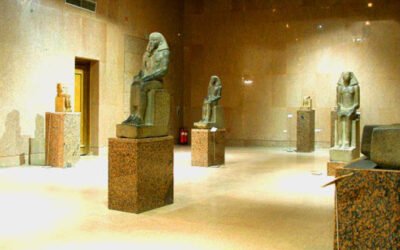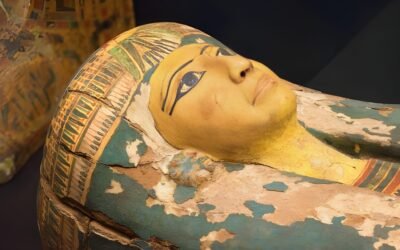
Memphis, located about 20 kilometers south of Cairo near the town of Mit Rahina, was the first capital of unified Egypt, founded by Pharaoh Menes around 3100 BCE. It remained a major political and religious center for more than 3,000 years, from the Early Dynastic Period through the New Kingdom, and today survives as an open-air museum and UNESCO World Heritage Site.
Key Takeaways
- Memphis was founded by Pharaoh Menes around 3100 BCE as the first capital of unified Egypt.
- It sits about 20 kilometers south of modern Cairo, near the town of Mit Rahina.
- The city was dedicated to the god Ptah, patron deity of craftsmen and architects.
- Memphis is a UNESCO World Heritage Site alongside the nearby Sakkara Necropolis and Dahshour pyramids.
- The site displays the colossal Statue of Ramses II, over 10 meters tall, and an alabaster sphinx believed to represent Queen Hatshepsut or Amenhotep II.
Origins of Egypt’s First Capital
Founded by Pharaoh Menes around 3100 BCE, Memphis was the first capital of unified Egypt. Strategically located at the mouth of the Nile Delta, the city became a center for trade, politics, and religion. The sacred capital was dedicated to the god Ptah, the patron deity of craftsmen and architects, whose temple once attracted pilgrims from across the ancient world.
Today, Memphis Egypt is part of a UNESCO World Heritage site, sharing its listing with nearby sites like the Sakkara Necropolis and the Dahshour pyramids. These sites represent the evolution of pyramid design and royal burial traditions that shaped Egypt’s legacy for millennia.
Monuments and Ruins on Site
At the site, visitors encounter monuments such as the Statue of Ramses II, a colossal limestone sculpture that once stood in the temple precincts. This statue, measuring over 10 meters, dates to the New Kingdom era. Nearby, an alabaster sphinx, believed to represent Queen Hatshepsut or Amenhotep II, adds further detail to the site.
Archaeologists have uncovered temples, palaces, workshops, and necropolises at Memphis that reveal the sophistication of ancient Egyptian urban life. The city’s proximity to The Nile River made it a hub for trade, linking Upper and Lower Egypt through the waterway.
Memphis Within Egypt’s Ancient Landscape
A short drive away, the Saqqara Pyramids hold the earliest pyramid structures, including the Step Pyramid of Djoser, the world’s first monumental stone building. In Dahshour, the Bent Pyramid and Red Pyramid show the architectural transition that led to the shape used at the Great Pyramids Of Giza.
Travelers can visit Memphis and its neighboring sites through Egypt Tour Packages that include guided excursions to these sites. Many itineraries combine Memphis with Cairo City attractions such as The Egyptian Museum Of Cairo and the Khan Al-Khalili Cairo market.
Religious Significance of Memphis
Memphis was a spiritual heartland as well as a political center. The Temple of Ptah, though mostly in ruins today, once housed sacred relics and statues symbolizing divine creation and craftsmanship. The city also played a role in funerary rituals and religious ceremonies connected to the development of Ancient Egyptian Animal Gods worship. Nearby necropolises like Sakkara and Dahshour reflected beliefs in the afterlife that shaped Egyptian burial systems for centuries.
Modern Exploration and Travel Tips
Travelers can reach Memphis from Cairo on day trips that include its sister sites. For a longer stay, itineraries like the 6 day Egypt tour or the 14 day Egypt tour allow time to explore Memphis, Saqqara, and Giza together. A luxury private tour Egypt option provides a personalized experience with an Egyptologist guide.
Combining Memphis with a Nile cruise offers another view of Egypt’s ancient geography. The Best Nile River Cruises often include stops at major historical landmarks along the river.
Visiting Memphis Today
Trips to Memphis Egypt can be booked through operators offering Egypt Vacation Packages, which pair Memphis with sites like The Grand Egyptian Museum and The Valley Of The Kings. Guided tours provide historical background, transportation, and context for the site.
Nearby attractions like the Sphinx Statue and the step pyramids extend the story of Memphis into the broader history of Egyptian monument-building.
Why Memphis Remains a Key Site
Memphis Egypt continues to attract historians, photographers, and travelers interested in Egypt’s early dynasties. Its monuments, its proximity to the Sakkara Necropolis and Dahshour, and its religious history make it one of the significant archaeological sites in the region. It is commonly included in a best Egypt itinerary.
An Egypt adventure tour can combine Memphis with other lesser-known sites scattered around the Nile Valley.
FAQs About Memphis Egypt, The Old Egyptian Capital
Where is Memphis Egypt located?
Memphis Egypt is situated about 20 kilometers south of modern Cairo, near the town of Mit Rahina. It lies close to major sites like the Sakkara Necropolis and the Dahshour pyramids.
What can visitors see at Memphis today?
Visitors can explore open-air museum displays featuring the Statue of Ramses II, the alabaster sphinx, temple ruins, and ancient artifacts.
How old is Memphis Egypt?
Memphis Egypt dates back to around 3100 BCE and served as the first capital of unified Egypt. It remained an influential city for over 3,000 years, from the Early Dynastic Period through the New Kingdom.
What’s the best way to explore Memphis Egypt?
The best way to experience Memphis is by joining guided tours available through Egypt Tour Packages. Many tours combine Memphis with visits to the Great Pyramids Of Giza.
Why is Memphis Egypt historically important?
Memphis Egypt symbolizes the unification of Upper and Lower Egypt and the birth of centralized power in ancient history. It was home to temples, royal palaces, and a population that influenced politics, religion, and art for centuries.