The Egypt 19th Dynasty was a New Kingdom dynasty that ruled Egypt roughly 1292 to 1189 BCE, founded by Ramses I and continued by Seti I and Ramses II, known as Ramses the Great. It restored Egyptian military power and produced major monuments including Abu Simbel, the Ramesseum, and additions to the Karnak and Luxor temples, following the peace treaty that ended the Battle of Kadesh.
Key Takeaways
- The dynasty ruled Egypt roughly 1292–1189 BCE, at the height of the New Kingdom.
- It was founded by Ramses I, who was appointed by Horemheb to restore stability after the 18th Dynasty.
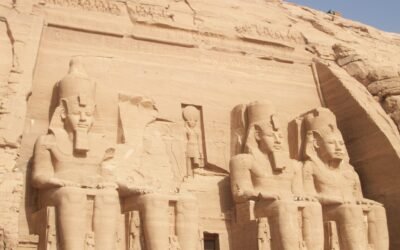
- Ramses II — “Ramses the Great” — built the Abu Simbel Temples and the Ramesseum in Thebes.
- The Battle of Kadesh was followed by one of history’s earliest recorded peace treaties, between Egypt and the Hittites.
- Seti I commissioned the Temple of Seti I at Abydos and has one of the most beautifully decorated tombs in the Valley of the Kings.
Key Rulers and the Restoration of Egyptian Power
The Egypt 19th Dynasty followed a period of political uncertainty and restored Egypt’s power and influence across the ancient world through military strength and temple building. Pharaoh Seti I commissioned the Temple of Seti I at Abydos, and his son Ramses II became the dynasty’s most celebrated ruler. Ramses II’s reign included the Battle of Kadesh, followed by one of history’s earliest recorded peace treaties, signed between Egypt and the Hittites. His colossal Abu Simbel Temples remain among the era’s most recognizable monuments.
Temples and Monuments Built During the Dynasty
Seti I and Ramses II launched extensive construction projects across Egypt, including temples in Luxor City and Aswan City. The Ramesseum Temple in Thebes reflects Ramses II’s ambition to record his reign in stone, and additions to Karnak Temple and Luxor Temple date to this period. In the Valley of the Kings, Seti I’s tomb is considered one of the most beautifully decorated, with painted scenes depicting the pharaoh’s journey through the afterlife. Travelers can also see the Statue of Ramses II.
Lasting Influence on Egypt
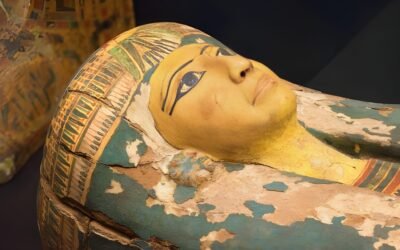
Beyond its military and architectural achievements, the 19th Dynasty’s peace treaties, urban planning, and religious reforms brought decades of stability that influenced later temple design and Egypt’s cultural identity. Artifacts from the dynasty, including relics and statues of Ramses II and Seti I, are held today at The Egyptian Museum of Cairo and The Grand Egyptian Museum.
Touring 19th Dynasty Sites Today
Travelers can see the dynasty’s monuments on Best Nile River Cruises or an Egypt tour with Nile cruise that stops at its temples and former capitals. Options range from a short 4 day Egypt tour to an in-depth 14 day Egypt tour, and itineraries such as the best Egypt itinerary, luxury Egypt tour package, Egypt family tour holidays, private guided tour of Egypt, Egypt adventure tour, and Egypt luxury trip can be built around these sites. Nile sailings such as the Oberoi Philae Nile Cruise and Best Dahabiya Nile Cruise, along with Egypt Vacation Packages, also include stops at these temples.
FAQs about Egypt’s 19th Dynasty
Who founded the Egypt 19th Dynasty?
The Egypt 19th Dynasty was founded by Pharaoh Ramses I, who was appointed by Horemheb to restore stability after the 18th Dynasty. Though his reign was brief, his lineage produced powerful successors like Seti I and Ramses II.
What major events happened during the 19th Dynasty?
Key events include the Battle of Kadesh, extensive temple construction across Egypt, and the signing of one of the world’s first recorded peace treaties between Egypt and the Hittites.
What are the most famous monuments from this dynasty?
Monuments include the Abu Simbel Temples, the Temple of Seti I, the Ramesseum Temple, and numerous masterpieces in Thebes and Luxor.
How can travelers today explore 19th Dynasty sites?
Travelers can join specialized Ancient Egypt Tours or customized Private Egypt Tours to explore temples, tombs, and monuments built during this extraordinary era.
What makes Ramses II significant in the 19th Dynasty?
Ramses II, often called “Ramses the Great,” was the most powerful pharaoh of the dynasty. His reign saw vast military campaigns, monumental architecture, and a long-lasting legacy visible across Egypt’s historical sites today.