The Abu Simbel Temples are two rock-cut temples in southern Egypt, built by Pharaoh Ramses II in the 13th century BCE and dedicated to Ramses II and Queen Nefertari. In the 1960s, UNESCO cut the entire complex into blocks and moved it to higher ground to save it from flooding by Lake Nasser. Sunlight still reaches the inner sanctuary twice a year, on February 22 and October 22.
Key Takeaways
- Built by Pharaoh Ramses II in the 13th century BCE; the Great Temple honors the gods Amun, Ra-Horakhty, Ptah, and the deified Ramses himself.
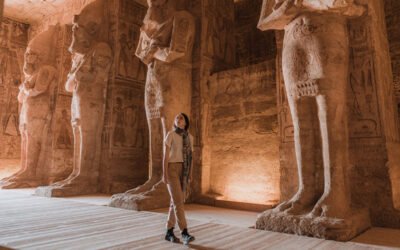
- Statues of Ramses II inside the Great Temple stand about 20 meters tall; interior reliefs depict the Battle of Kadesh.
- The smaller temple honors Queen Nefertari with a statue equal in size to the pharaoh’s, a rare gesture in Egyptian art.
- In the 1960s, UNESCO relocated the temples in cut blocks to protect them from flooding caused by the Aswan High Dam and Lake Nasser.
- Located about 280 kilometers south of Aswan; best visited October to April.
How the Temples Were Built and Later Relocated
Pharaoh Ramses II commissioned the twin temples of Abu Simbel in the 13th century BCE, carving them directly into a sandstone mountainside. The Great Temple honors the gods Amun, Ra-Horakhty, and Ptah alongside the deified Ramses himself, while the smaller temple is dedicated to his wife, Queen Nefertari. In the 1960s, construction of the Aswan High Dam threatened to submerge the temples under the rising waters of Lake Nasser. In an international effort led by UNESCO, engineers cut the temples into large blocks and reassembled them on higher ground. The relocated temples remain aligned so that sunlight reaches Ramses’ inner sanctuary twice a year, on February 22 and October 22.
Inside the Great Temple and the Temple of Nefertari
Inside the Great Temple of Ramses II, statues of the pharaoh stand about 20 meters tall. The inner chambers are carved with scenes of Ramses’ military campaigns, including the Battle of Kadesh. The smaller temple, dedicated to Queen Nefertari, is one of the few temples in Egypt where a queen’s statue stands equal in size to her pharaoh husband’s, a rare honor in ancient Egyptian art.
Getting to Abu Simbel from Aswan
Abu Simbel sits about 280 kilometers south of Aswan City. Most visitors reach it by road or a short flight from Aswan, or as part of a Lake Nasser Cruise Egypt. Early morning tours let visitors see the temples in soft light before the crowds arrive. The best time of year to visit is during the cooler months from October to April.
Nearby Attractions
Travelers touring the Aswan region often pair Abu Simbel with the Temple of Philae and the High Dam of Egypt. Other nearby sites include the Nubian Village, the Nubian Museum in Aswan, the Temple of Kalabsha, and Lake Nasser In Africa, one of the world’s largest artificial lakes.
Tour Options
Abu Simbel is included as an optional extension on many Egypt Tour Packages focused on Upper Egypt, including short trips like the 6 day Egypt tour and longer ones such as the 14 day Egypt tour. It can also be added to an Egypt adventure tour, a luxury Egypt tour package with a private Egyptologist-led visit, or Egypt family tour holidays. Extended Nile journeys such as the Steigenberger Omar El Khayam Lake Cruise and the Movenpick Prince Abbas Lake Cruise also include stops at Abu Simbel and other Nubian temples.
Frequently Asked Questions About Abu Simbel Temples
Who built the Abu Simbel Temples?
Pharaoh Ramses II commissioned the Abu Simbel Temples during the 13th century BCE. They were constructed to honor the gods and celebrate his reign and victories, especially the Battle of Kadesh.
How were the Abu Simbel Temples relocated?
In the 1960s, the temples were cut into large blocks and moved to higher ground to protect them from flooding caused by the creation of Lake Nasser. This relocation was part of an international UNESCO project.
When is the best time to visit Abu Simbel?
The best time to visit is during the cooler months from October to April. Visiting early in the morning or during the sun alignment dates in February and October offers a unique experience.
How do I get to Abu Simbel from Aswan?
Most travelers take a guided road trip or a short flight from Aswan. Others take a Lake Nasser Cruise Egypt, which includes Abu Simbel as a stop.
What other attractions can I visit near Abu Simbel?
Nearby attractions include the Temple of Philae, the High Dam of Egypt, and the Nubian Village.