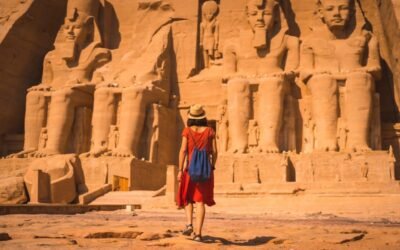
Habu Temple (Medinet Habu) is the mortuary temple of Pharaoh Ramses III, built during Egypt’s 20th Dynasty on the West Bank of Luxor City. It is one of Egypt’s best-preserved temple complexes, with detailed reliefs recording Ramses III’s military victories, including the Battle of Kadesh, and it was dedicated to the god Amun and to Ramses III’s own deified spirit.
Key Takeaways
- Built by Pharaoh Ramses III of the 20th Dynasty as his mortuary temple.
- Located on the West Bank of Luxor City, near the Valley of the Kings and the Temple of Hatshepsut.
- Reliefs on the temple’s pylons depict Ramses III’s victory at the Battle of Kadesh.
- The complex includes courtyards, hypostyle halls (grand halls filled with rows of columns), chapels, storage areas, royal palaces, and shrines.
- Best visited October through April, with morning light considered ideal for photography.
Layout and Architecture
Medinet Habu was a fortified complex that served religious and administrative purposes. Its outer walls were built for protection, while the inner sanctuaries were dedicated to Amun and the deified Ramses III. The grand entrance features two massive pylons, each carved with scenes of the pharaoh defeating his enemies. Inside are courtyards, hypostyle halls, and chapels decorated with reliefs that still retain traces of their original color, along with auxiliary buildings such as storage areas, royal palaces, and shrines for other deities. Its scale is comparable to other Theban landmarks like the Karnak Temple and Luxor Temple.
Religious and Historical Significance
The temple’s inscriptions narrate Egypt’s prosperity during Ramses III’s reign and his victories against foreign invaders, including the Sea Peoples. Its walls depict ritual offerings to Amun, chief deity of Thebes, and festivals such as the Beautiful Feast of the Valley. The temple’s westward orientation, toward the setting sun, reflects the ancient Egyptian concept of the soul’s eternal journey. Habu Temple sits within the ancient necropolis (city of the dead) of Thebes, alongside the Valley of the Kings, the Temple of Hatshepsut, and the Colossi of Memnon. Archaeologists continue to study the site, and its near-perfect preservation is credited to its isolation and robust construction; recent findings are covered at What Are The New Discoveries In Egypt?.
Best Time to Visit
The temple is open year-round, but the cooler months from October to April are considered the best time to visit. Morning visits are ideal for photography, as the soft sunlight brings out the colors of the reliefs and textures of the limestone walls. Guided tours help explain the depictions of triumph, ritual, and ceremony carved into the walls. The temple pairs well with a cruise along The Nile River, and travelers can book it as part of the Best Nile River Cruises, an Egypt family tour holidays itinerary, an Egypt private tour package, or a luxury Egypt tour package. Shorter options include the 4 day Egypt tour and 6 day Egypt tour, while the 14 day Egypt tour allows more time across Luxor’s temples, tombs, and museums, including Habu Temple. Broader options are available through Egypt Tour Packages.
Nearby Sites
Nearby temples worth visiting include the Ramesseum Temple, Dandara Temple, and The Temple Of Seti.
FAQs About Habu Temple
1. Who built the Habu Temple?
Pharaoh Ramses III of the 20th Dynasty built the Habu Temple as his mortuary temple, dedicated to the god Amun and to his own deified spirit.
2. Where is Habu Temple located?
Habu Temple, also called Medinet Habu, is located on the West Bank of Luxor City, near other major sites such as the Valley of the Kings and the Temple of Hatshepsut. For tips on planning a visit, see our guide to visiting Medinet Habu.
3. What makes Habu Temple unique?
It is one of Egypt’s best-preserved temples, featuring detailed reliefs, vibrant colors, and inscriptions that document Ramses III’s reign, battles, and religious rituals.
4. Can I visit Habu Temple during a Nile cruise?
Yes, many Best Nile River Cruises include stops in Luxor, allowing travelers to explore Habu Temple along with other ancient monuments.
5. What other temples should I visit near Habu Temple?
Nearby attractions include the Ramesseum Temple, Dandara Temple, and The Temple Of Seti, all of which showcase ancient Egyptian art and history.