Education in Ancient Egypt: The Foundation of Knowledge and Civilization
Education in Ancient Egypt played a crucial role in shaping one of the world’s most sophisticated civilizations. The Egyptians valued learning, wisdom, and the written word, which helped them create lasting achievements in art, science, architecture, and governance. To understand their greatness, one must explore how education developed along the banks of The Nile River — the lifeline of their culture.
Attention: The Significance of Learning in Ancient Egyptian Society
Education in Ancient Egypt was not just about literacy. It was a system deeply rooted in religion, administration, and social order. The priests, scribes, and elite families ensured that knowledge was passed down through generations. The discovery of ancient writing on papyrus and temple walls, such as those found near the The Temple Of Seti and Karnak Temple, highlights the Egyptians’ dedication to education and record-keeping.
Children of nobles began education early, often under the guidance of priests. Schools were attached to temples and palaces, symbolizing a close connection between wisdom and divine authority. Knowledge was the path to power, and literacy distinguished the educated class from ordinary citizens.
Interest: How Ancient Egyptian Schools Operated
In Ancient Egypt, the core of education revolved around practical subjects necessary for administration and religious duties. The “House of Life,” a temple-based educational institution, acted as both a school and a library. Here, students learned to write hieroglyphs, perform mathematical calculations, and understand religious texts. Many of these teachings are preserved in documents displayed in places like The Egyptian Museum Of Cairo.
Students practiced writing on limestone flakes or wooden boards before progressing to papyrus — a luxury material made from the papyrus plant of the Nile. They were trained to become scribes, who recorded taxes, trade transactions, and royal decrees. Scribes were among the most respected professions of the time, often working in temples, palaces, and tombs such as those in the The Valley Of The Kings.
Education also included moral and ethical training. Ancient texts like “The Instructions of Ptahhotep” emphasized virtues such as humility, respect, and loyalty. These principles guided students in their professional and personal lives. The combination of intellectual and moral education made the Egyptian system ahead of its time.
Desire: The Subjects and Skills That Shaped Egyptian Brilliance
Education in Ancient Egypt was comprehensive, covering reading, writing, mathematics, astronomy, and medicine. Mathematics was essential for constructing monumental structures like The Great Pyramids Of Giza and temples such as Luxor Temple. Precise measurements, geometry, and knowledge of the stars allowed them to align buildings with celestial bodies, showcasing their advanced understanding of science.
Medical education was equally impressive. Priests who studied in temple schools became healers and pharmacists, recording remedies and treatments on papyrus scrolls. Their practices influenced later civilizations, including the Greeks. Astronomical education helped Egyptians develop the Ancient Egyptian Calendar, one of the earliest solar calendars in history.
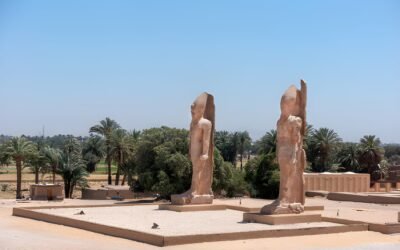
Artistic and religious instruction was another key component. Students learned to paint, sculpt, and carve, ensuring that temples and tombs like the Temple Of Hatshepsut and the Colossi Of Memnon reflected divine beauty. Their training inspired cultural masterpieces that continue to fascinate historians today.
Action: Preserving and Experiencing Ancient Egyptian Education Today
Modern travelers can witness the legacy of education in Ancient Egypt by exploring historical sites and museums across the country. Visiting Luxor City and Aswan City reveals how ancient wisdom shaped the landscape of temples, carvings, and inscriptions. Exploring the The National Museum Of Egyptian Civilization provides deeper insights into the intellectual history of this civilization.
For travelers eager to explore the roots of Egyptian knowledge, guided experiences like Ancient Egypt Tours offer detailed educational journeys. Combining these tours with a relaxing Best Nile River Cruises experience allows visitors to learn where the Egyptians studied and thrived along the Nile’s fertile banks.
Those who want a more immersive trip can consider the Egypt adventure tour or the luxurious luxury Egypt tour package for a deeper appreciation of Egypt’s educational heritage. Each itinerary includes visits to ancient schools, temples, and libraries that represent the pillars of Egyptian civilization.
The Role of Temples and Priests in Education
Temples were more than places of worship; they were centers of learning. The priests, who acted as scholars, taught writing, mathematics, astronomy, and theology. Many discoveries about ancient classrooms have been found in temple complexes like Edfu Temple and Kom Ombo Temple. These temples trained scribes and priests who maintained Egypt’s administration, rituals, and culture for centuries.
Women and Education in Ancient Egypt
Although education primarily focused on males, women of noble families also received instruction. They were trained in household management, music, and religious practices. Some women, such as those serving in temple roles, became literate and participated in religious ceremonies. This equality in learning was rare in ancient times and highlights the progressive nature of Egyptian society — a feature discussed in modern topics like Women’s Rights In Egypt.
Legacy of Ancient Egyptian Learning
The influence of Egyptian education extended far beyond its borders. The Greeks and Romans admired their knowledge, adopting many of their scientific and philosophical ideas. The tradition of recording wisdom through papyrus and stone ensured that future generations could learn from their experiences. Artifacts preserved in museums and monuments across Egypt continue to tell stories of scholars, scribes, and visionary teachers.
Today, travelers inspired by the intellectual legacy of Ancient Egypt can enhance their understanding through well-planned itineraries such as the best Egypt itinerary or specific packages like the Egypt tour with Nile cruise. Each journey immerses visitors in the cultural and educational achievements that shaped one of history’s most enduring civilizations.
FAQs About Education In Ancient Egypt
1. Who received education in Ancient Egypt?
Education in Ancient Egypt was primarily available to the children of nobles, priests, and administrators. However, talented individuals from lower classes could also become scribes if they demonstrated great skill and dedication.
2. What subjects did Egyptian students study?
Students learned reading, writing, arithmetic, astronomy, medicine, and moral principles. Their education prepared them for administrative, religious, and artistic roles.
3. Where were schools located in Ancient Egypt?
Schools were often attached to temples or royal institutions. The “House of Life” was the most prestigious educational center, serving as both a school and a library.
4. How did education impact Egyptian society?
Education created a literate class of scribes and priests who maintained the government, economy, and religion. It preserved knowledge and ensured cultural continuity for millennia.
5. Can travelers learn about Ancient Egyptian education today?
Yes, visitors can explore museums, temples, and historical sites such as The Grand Egyptian Museum and Dandara Temple to learn about ancient schools, hieroglyphs, and the evolution of learning in Ancient Egypt.